As I continue building NeuroMeteo, my aim is to help people living with chronic back pain and weather sensitivity notice environmental changes that may coincide with how they feel.
The latest update brings two major pieces together: a bio-inspired pattern-learning engine that runs on the phone, and a new screen called Radar. It is a step toward turning a dense stream of atmospheric measurements into useful context at a glance.
Why a regular weather forecast can miss the point
“Tomorrow: 18°C with light rain” is a useful forecast, but it does not capture the combination of conditions a person may want to compare with their own history. The rate of pressure change over six hours, accumulated humidity, geomagnetic activity, temperature shifts, and the way those signals overlap can all matter when looking for personal patterns.
I wanted the app to recognize recurring weather fingerprints and compare them with each user’s own pain logs. These comparisons can help people explore possible associations in their data; they are not a diagnosis or a guarantee of what someone will feel.
Under the hood: a bio-inspired learning model
I took inspiration from the mushroom body, a structure studied in neuroscience for its role in sparse sensory representations. The idea is to turn a rich set of inputs into a compact signature that can be compared efficiently.
- Sparse weather fingerprints. Fifteen environmental telemetry features are encoded into a 2,000-bit representation of simulated Kenyon cells. An APL-inspired inhibition step keeps the strongest five percent active. Jaccard similarity can then find past weather snapshots with a similar active pattern.
- Hebbian-style adaptation. When a user records a pain level, the model updates its associations on the device. The goal is a lightweight update that takes milliseconds, so learning does not depend on a server round trip.
- Local-first data handling. Model weights and calculations stay in the app’s local SQLite store. Sensitive health records are not sent to a third-party machine-learning service for these calculations.
This architecture is intentionally small and practical: it lets the app compare today’s pattern with the user’s own history right where that history lives.
From a complex chart to the Radar screen
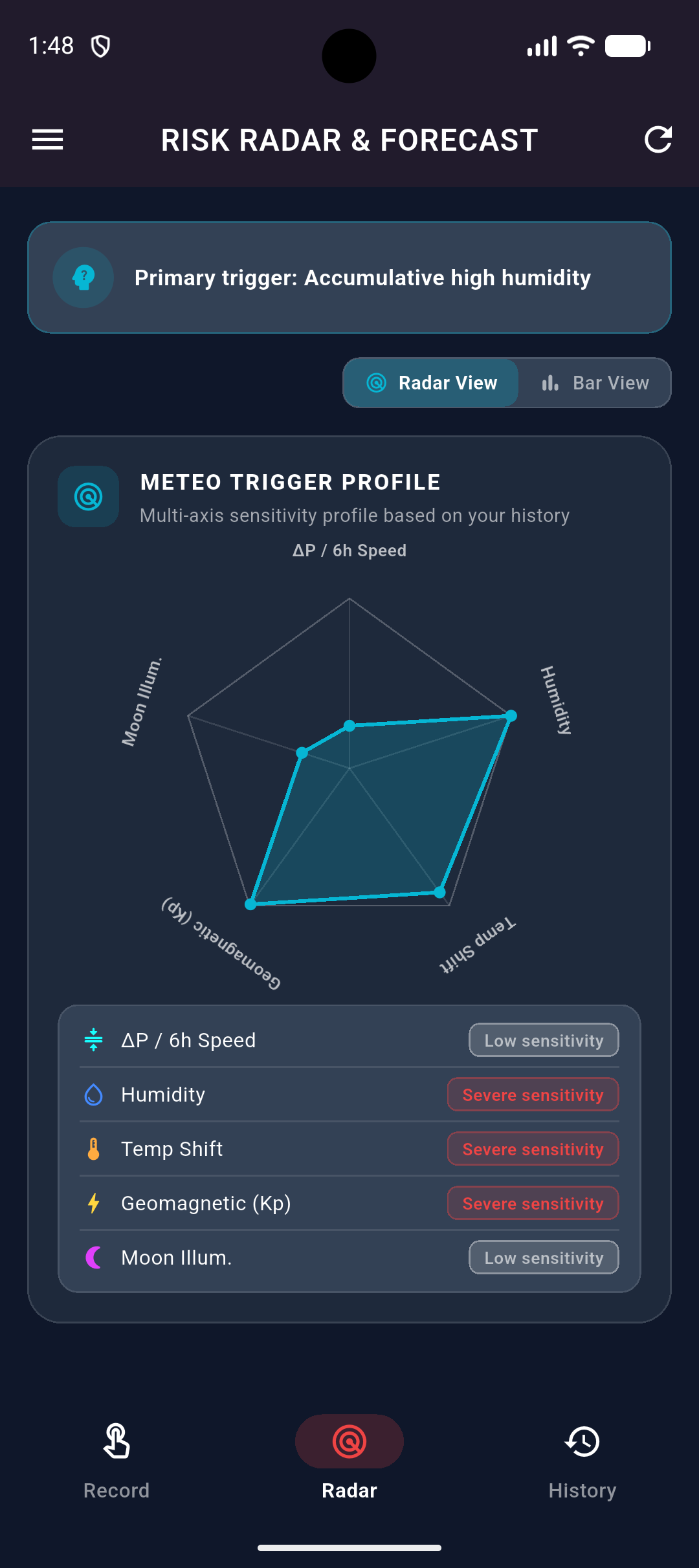
My first version put the trigger profile deep inside the analytics area as a five-axis radar chart. It carried a lot of information, but early feedback made one thing clear: many people found a complex chart hard to interpret quickly.
So I reworked the experience into a dedicated Radar screen. The visual profile is still there for people who want to explore it, but the key forecast and its explanation now come first.
A look at Radar
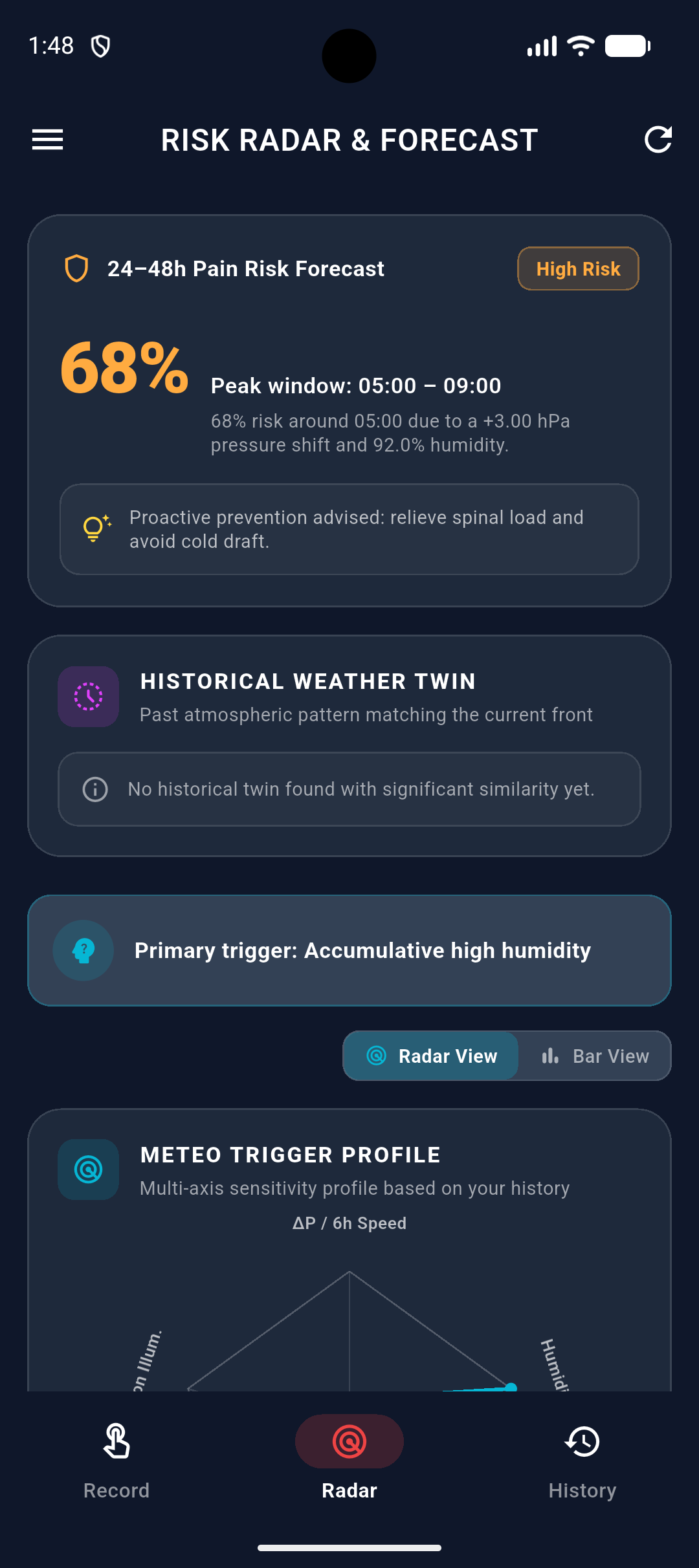
- A 24–48 hour personal outlook. A clear risk level and peak time window are paired with the weather factors behind the estimate and a gentle prevention prompt.
- Historical weather twins. The app looks for similar patterns in a person’s own history and can show what their recorded pain was on those dates. A match appears only when there is enough relevant data.
- Two ways to read triggers. Keep the five-axis radar chart or switch to progress bars and a plain-language summary of the strongest observed trigger.
- Direct notification links. A forecast alert can open Radar directly, taking the user to the risk window and related guidance.
Make the hard work useful
Complex models matter only when their output is understandable and useful. Radar brings atmospheric measurements and personal history into one place to answer two simple questions: what is changing in the weather, and what does my own history suggest I should pay attention to?
NeuroMeteo is a personal tracking and pattern-exploration tool. Its estimates are informational, not medical advice. Decisions about symptoms and treatment belong with the user and their healthcare professional.