A couple of years ago, after two lumbar spine surgeries and a painful recurrence, my doctor handed me a blunt reality check: “Get used to it—you’re weather-sensitive now.”
At first, I was skeptical. But then the pattern became impossible to ignore. I could be feeling great, doing aikido, cycling, or hiking, and then out of nowhere, a brutal flare-up would knock me out for four days straight. No obvious physical trigger, no wrong movements—just sudden nerve pain.
Eventually, I noticed it usually coincided with heavy clouds, sudden cold fronts, or storm warnings. My back was literally predicting atmospheric shifts faster than the weather app on my phone.
As an engineer, when faced with a frustrating problem full of hidden variables, my natural instinct is to collect data. So I decided to build NeuroMeteo.
↓ pain ↑observe · log · learn
What NeuroMeteo actually is
NeuroMeteo is a lightweight Android app built to capture exact environmental telemetry the moment pain strikes.
When you’re in the middle of a bad flare-up, the last thing you want to do is fill out a lengthy medical questionnaire. I designed the entry flow to take literally two seconds: you tap one prominent “LOG PAIN” button and adjust a single 1–100 slider.
Under the hood, the app instantly takes a “digital snapshot” of your surrounding environment:
- Barometric pressure and recent pressure changes
- Temperature, humidity, wind, and local weather conditions
- Geomagnetic activity and other environmental signals
- Step counts and recent activity context
To make statistical analysis actually work, the app also quietly logs baseline “zero-pain” snapshots on normal days. That way, you can compare clear days against flare-up days and see what actually changed.
A look inside the app
NeuroMeteo / Android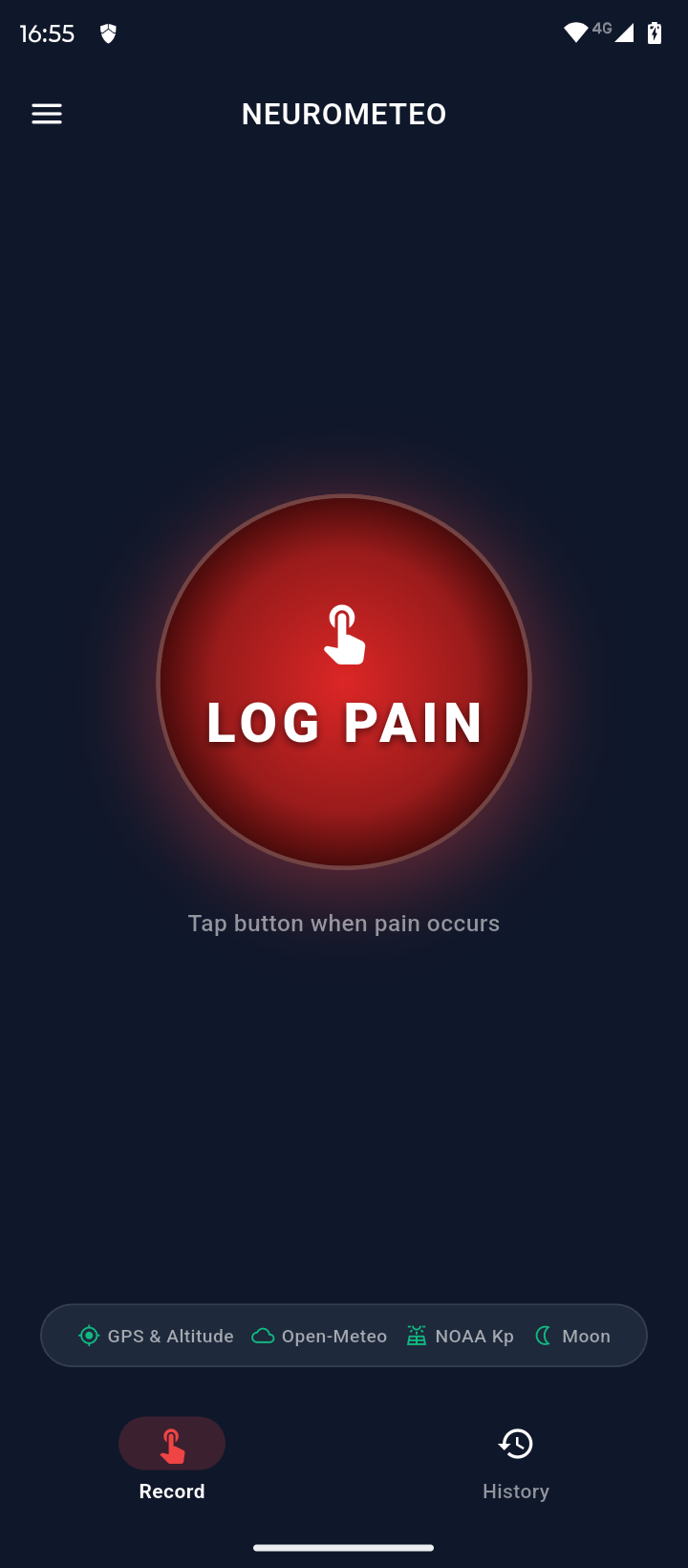
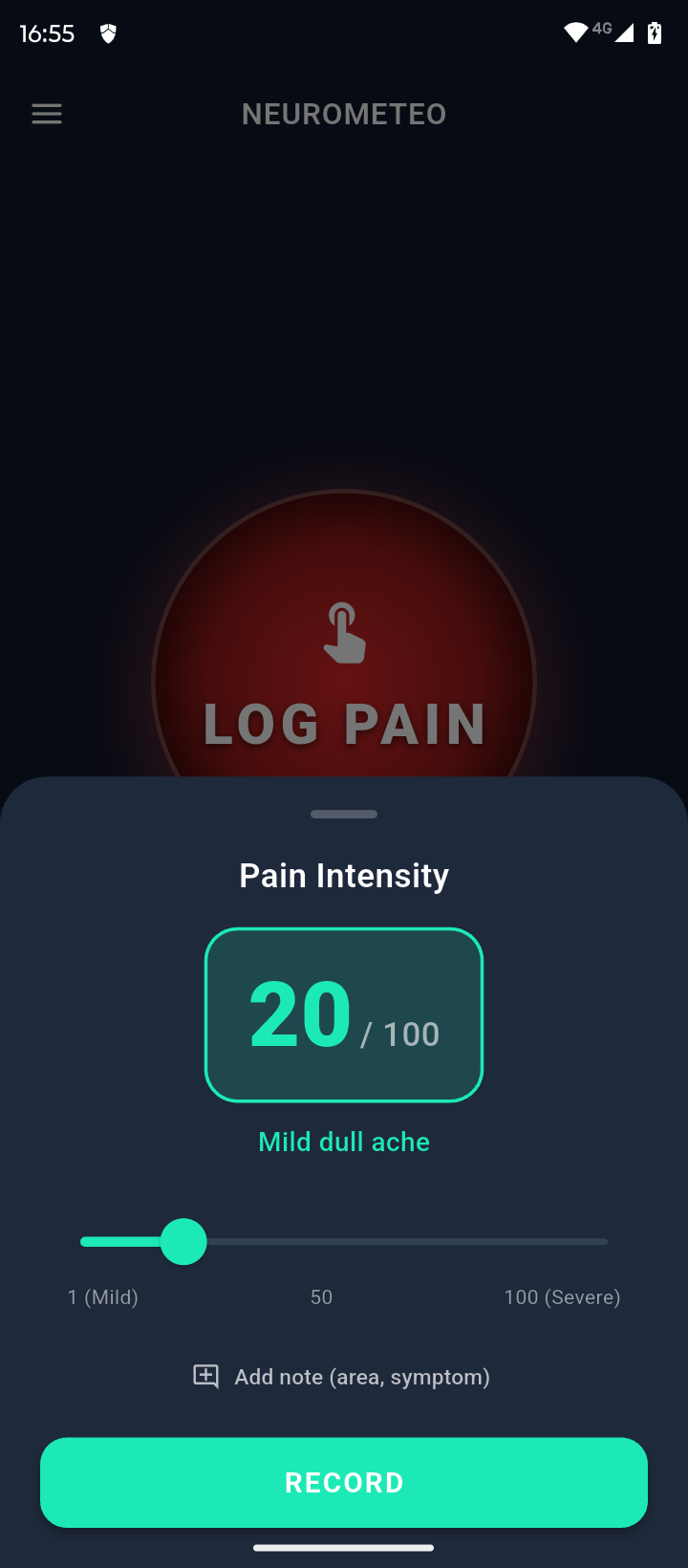
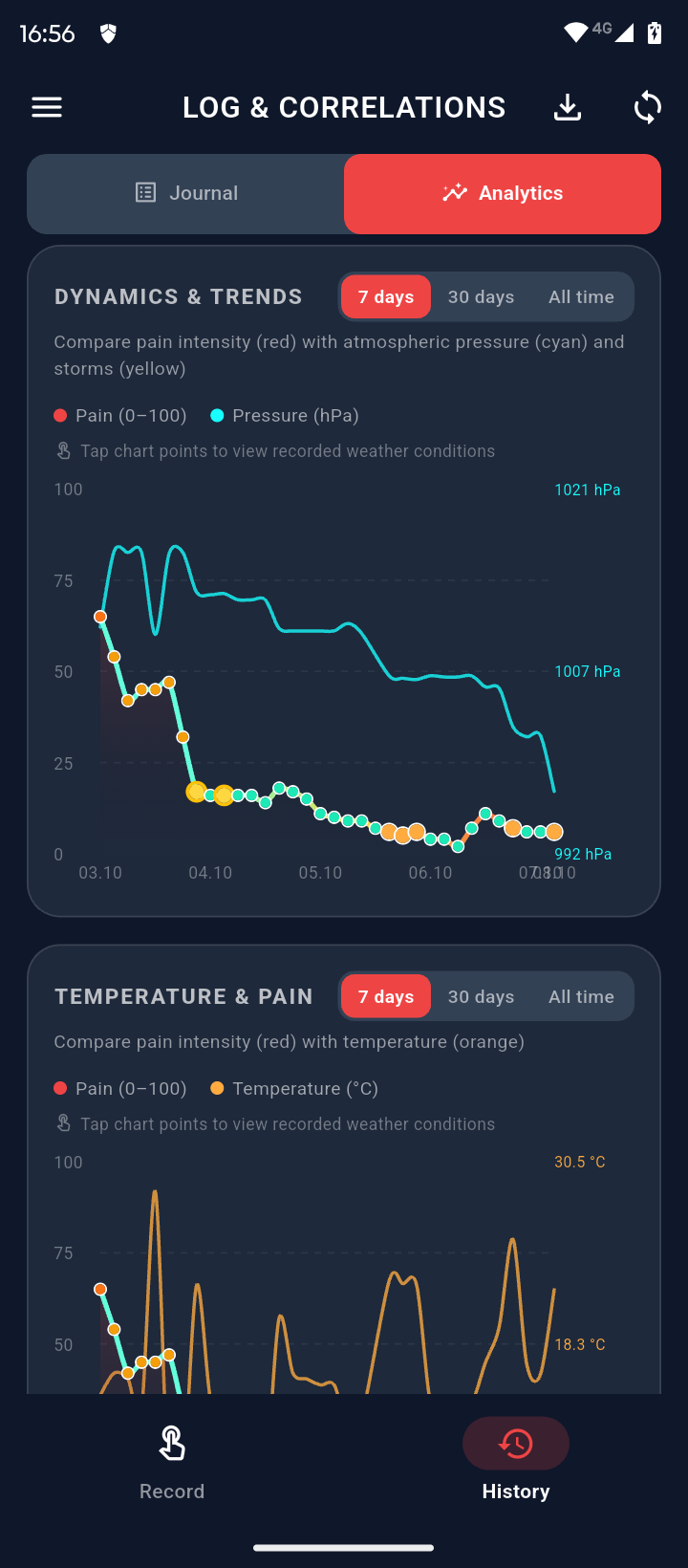
How it’s built
I built the app with Flutter for a clean UI, backed by an offline-first SQLite database (neurometeo.db). Pain doesn’t wait for cellular reception, so everything stays local first and then syncs to Firebase Cloud Firestore whenever an internet connection is available.
Instead of just storing raw logs, I built an automated ML Feature Store engine directly inside the app. It calculates rolling 24-hour weather averages, pressure deltas, and activity ratios, exporting structured CSV files ready for scikit-learn, XGBoost, or Pandas.
It also features Meteo-Alerts: background workers analyze 48-hour weather forecasts and send a push notification hours before a rapid pressure drop or geomagnetic storm hits, giving me a heads-up to tone down physical strain.
What’s next
I’ve just finished setting up the developer infrastructure and preparing the app for closed testing on Google Play.
Right now, I’m logging my own daily data and testing the forecast warnings. The long-term goal isn’t just keeping a history log—it’s prediction. Once I accumulate 50 to 100 clean data points, I plan to train a personalized machine learning model to predict flare-ups before they happen.
If you’ve ever felt like your joints or spine react to the sky, you’re not crazy—it’s biology reacting to physics. And now we have the telemetry to prove it.