Barometric pressure changes, geomagnetic Kp indices, and the phases of the Moon are useful signals for detailed analysis. But let’s be honest: first thing in the morning, most people don’t want to study a dashboard. They want to open an app and read a clear outlook for the day ahead.
So I added a daily biometeorological summary to NeuroMeteo, generated with Gemini 2.0 Flash. It turns weather context and aggregated risk signals into a concise forecast for today and tomorrow, written in the user’s language.
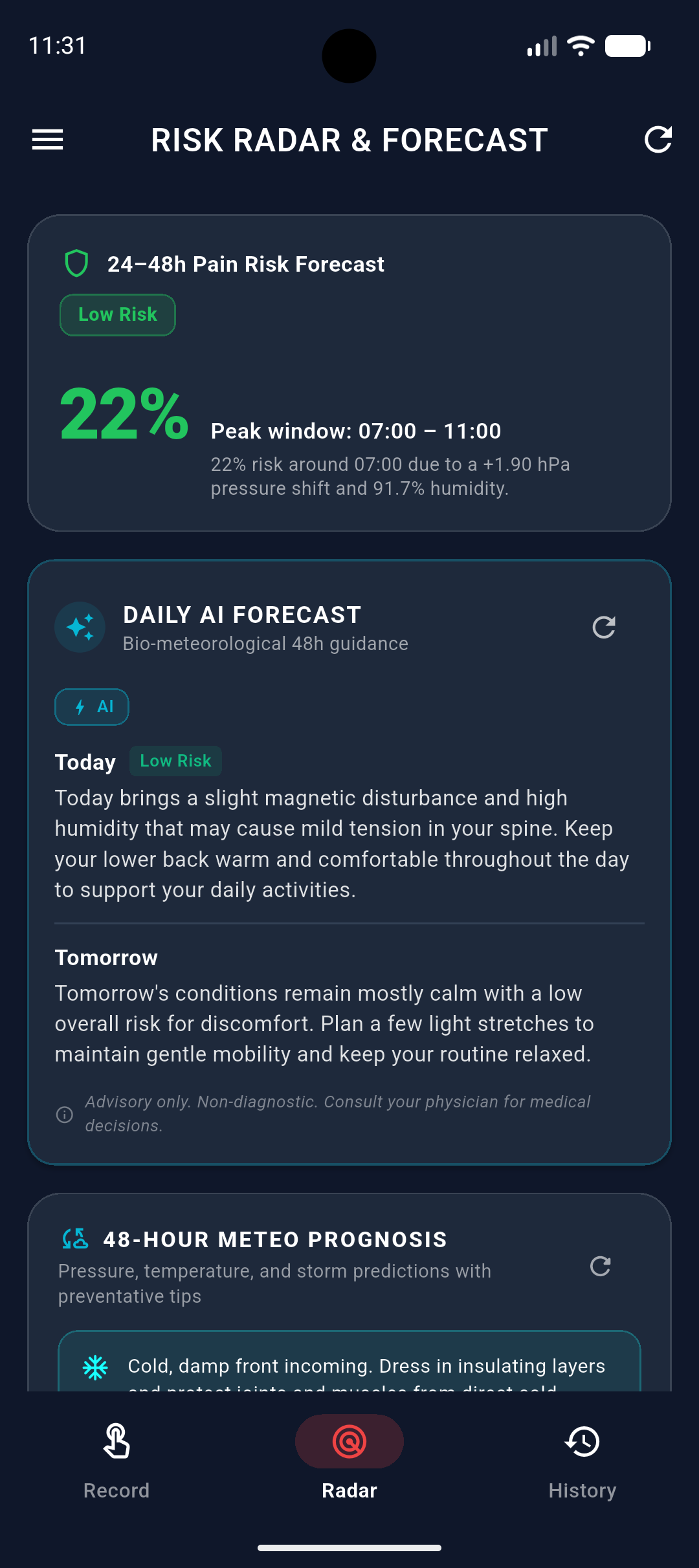
One request, once a day
A Firebase Cloud Function gathers the current context and aggregated risks from MlFeatureStore, then makes one model request per day. Gemini returns a compact outlook for today and tomorrow in the language selected by the user. Daily caching keeps the experience consistent and avoids repeatedly generating the same summary.
Useful with or without a connection
The generated text is cached in the local SQLite database. If the user is offline, has airplane mode on, or is still calibrating their personal model with fewer than ten entries, NeuroMeteo switches immediately to a deterministic local template generator. The summary remains available without waiting for a network request.
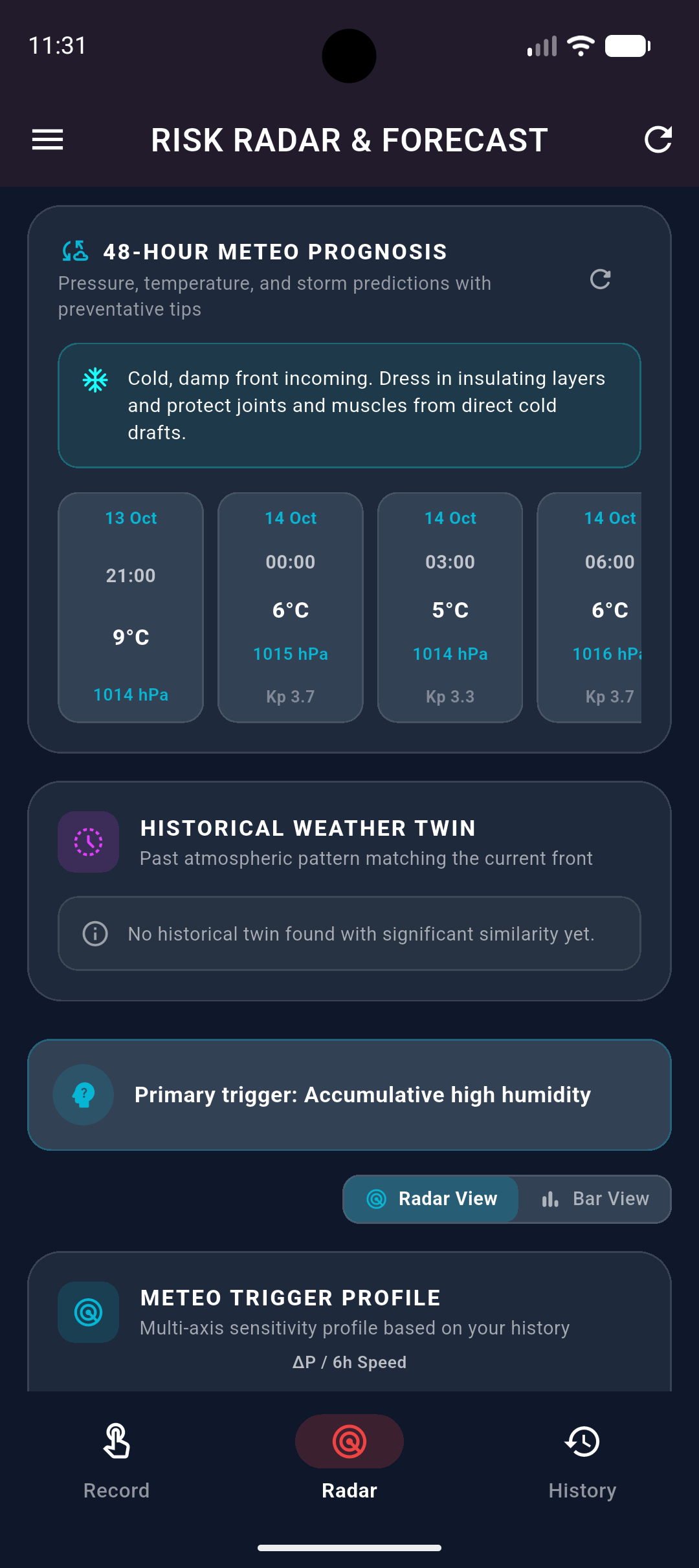
AI where it helps
With a single daily request and Gemini Flash’s speed, the estimated AI cost is only a fraction of a cent per user per month. Meanwhile, the charts and trigger radar are still there for anyone who wants to explore correlations in more depth.
Now the first thing someone sees in the morning can be a calm, understandable summary—while the detailed signals remain available just a tap away. I also made the text a little larger, at my wife’s request.
NeuroMeteo’s summaries are informational and are not medical advice or a diagnosis. The app is designed to help people explore personal patterns in their own data.