A little over a year ago, I started thinking about an application for people who practice martial arts. I wanted to build a place to track progress, prepare for exams, and study techniques. Since I practice Aikido Aikikai myself, that became the first clear use case for a project I called Budo Notebook.
I eventually completed a Django web application with the core functionality in place. It could bring together a training journal, exam requirements, syllabus material, and personal notes. Building it helped me explore the idea from end to end—but it also revealed a mismatch between the tool and the way training happens.
The right moment to take a note
On the tatami, I want to capture details while they are still fresh: a movement to revisit, a photo, or a short video with an explanation from my sensei. With a web app, it was too easy to postpone that until after practice. By then, small but useful details could already be gone.
So I decided to bring the architecture and functionality I had built into an Android app. This is not a new idea so much as a new home for it: a phone is close at hand before and after a class, and quick capture can fit more naturally into a training routine.
A look at the first prototype
A personal journal with a dojo connection
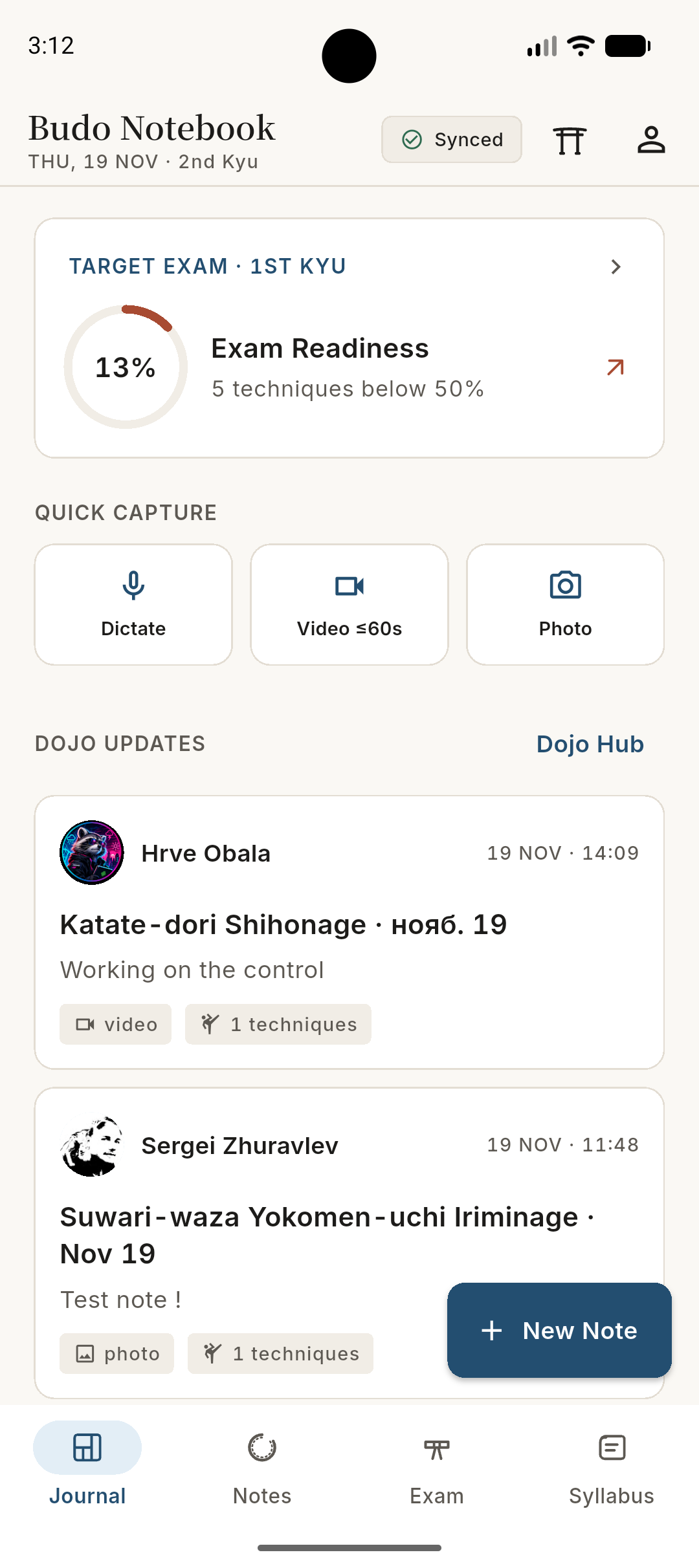
Budo Notebook is taking shape as a mix of a personal diary and a small social platform. The personal side is for recording practice, keeping notes and media, and preparing for exams. The dojo side can make it easier to follow shared updates and exchange useful details with other practitioners.
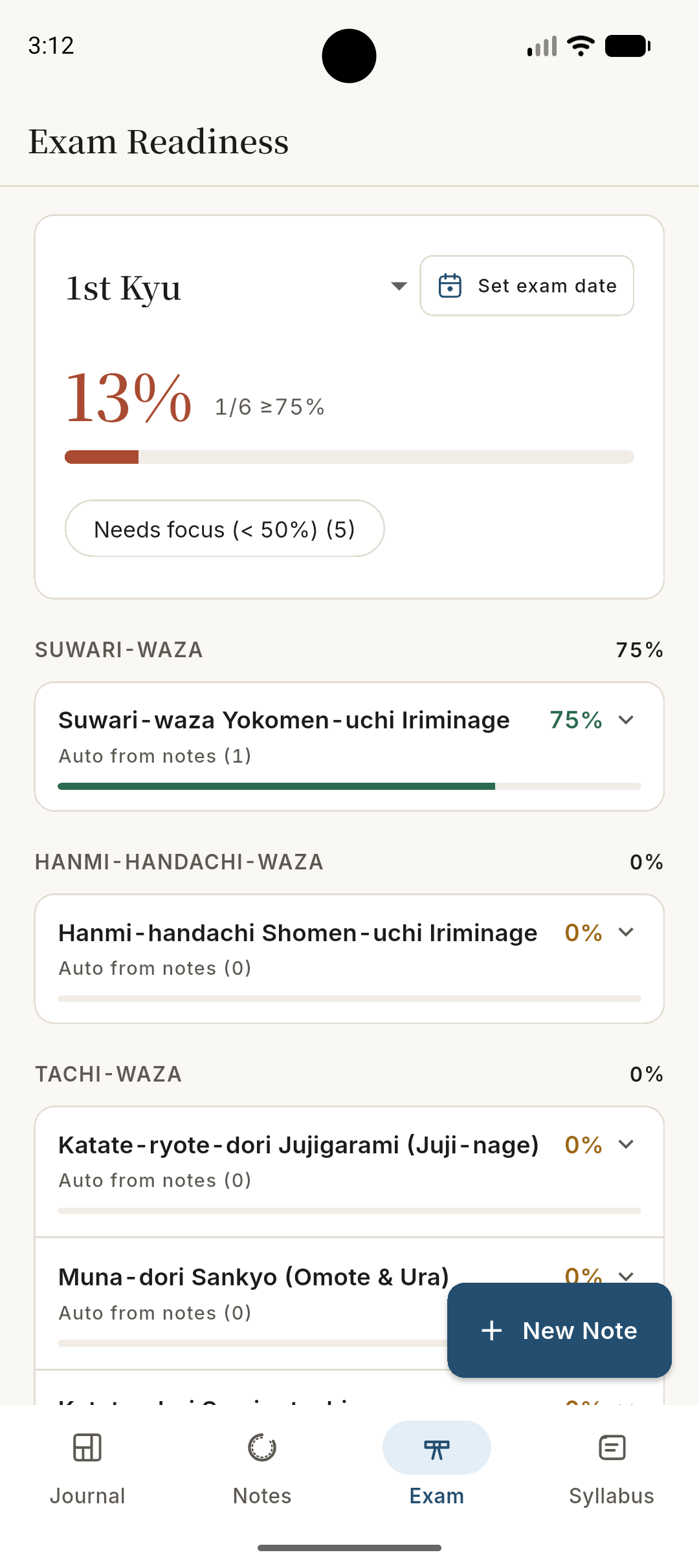
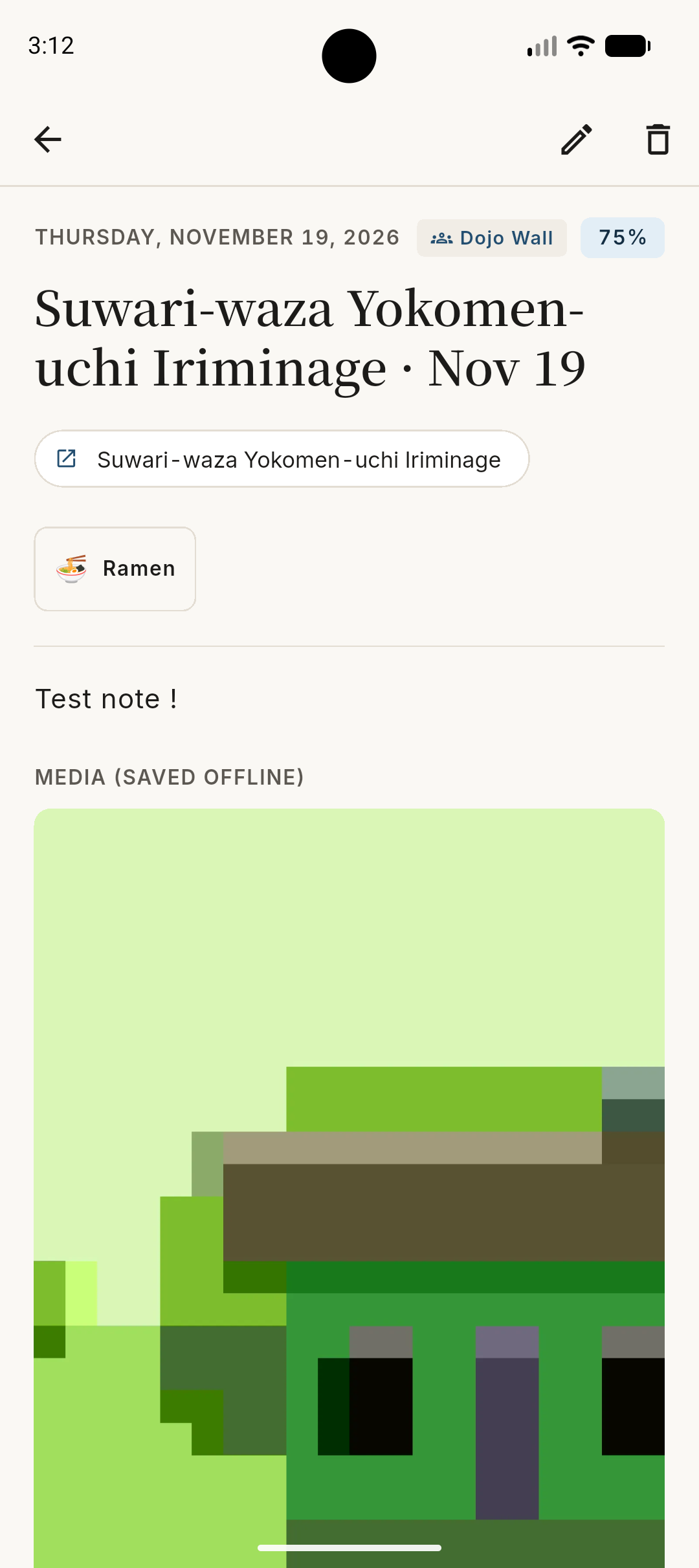
The prototype brings several parts of that idea onto the phone:
- Quick capture: dictate a note, take a photo, or record a short video from the journal.
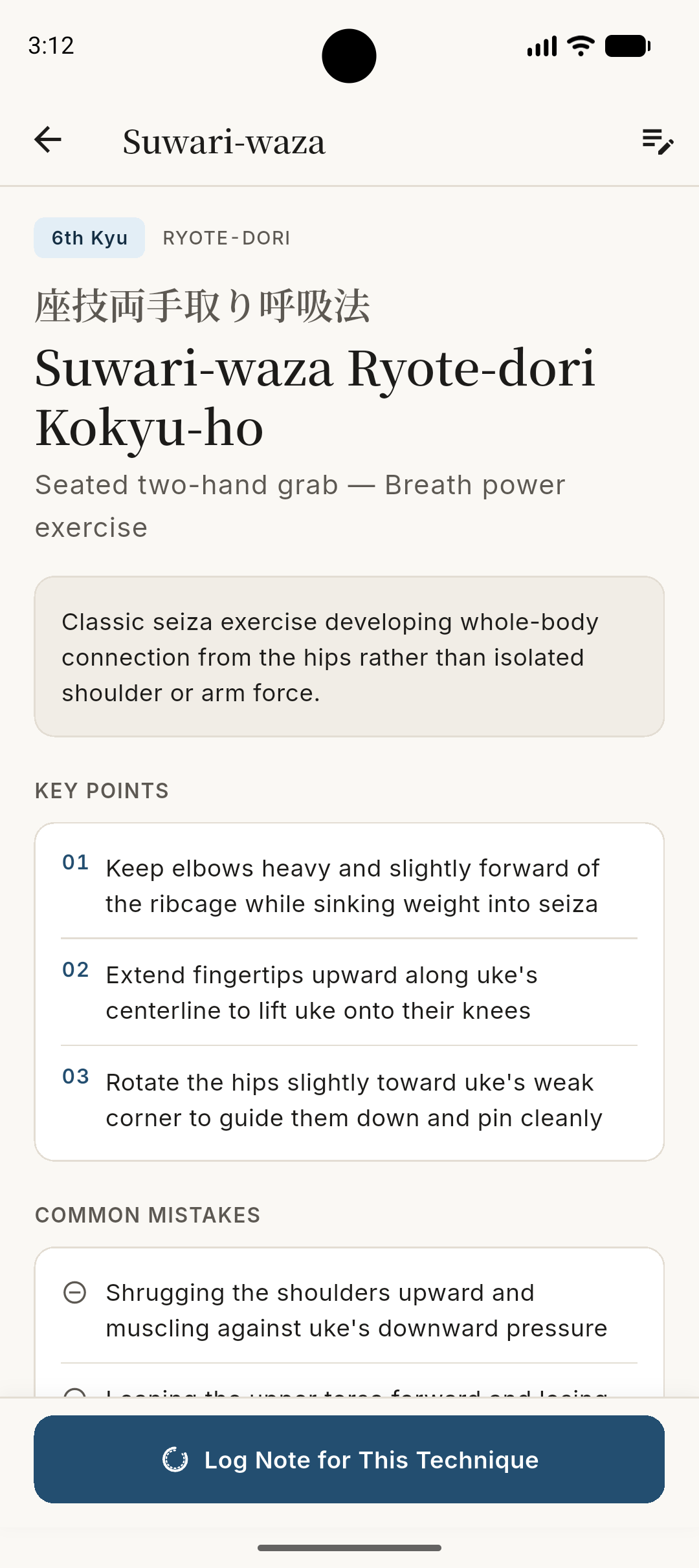
- Practice notes: connect a reflection to a technique and keep related media alongside it.
- Exam preparation: see progress against a level and identify techniques that need more attention.
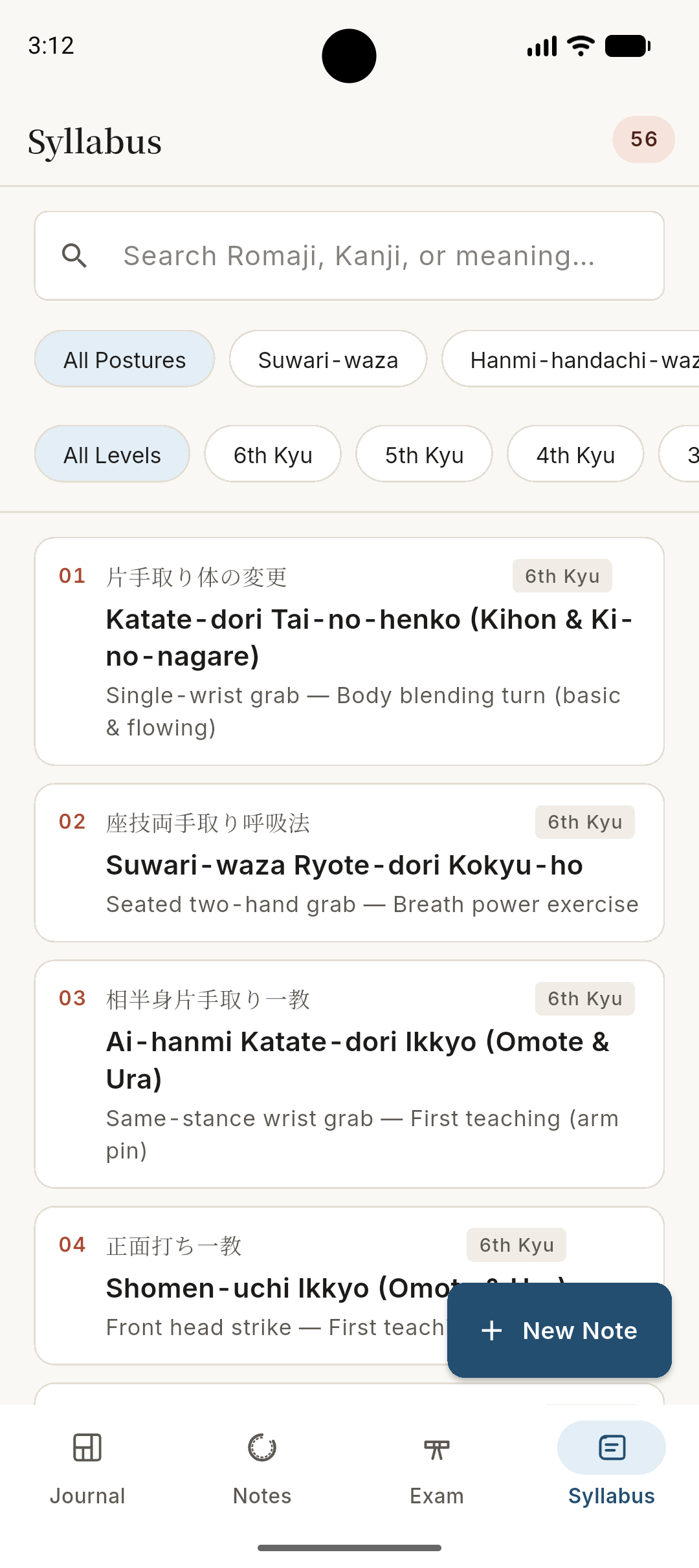
- Syllabus browsing: search and filter the technique list to find what you are studying.
- Dojo updates: see entries shared in the dojo space as well as your own training history.
A new platform, built on what I learned
The Django version was a complete first pass at the product, not a dead end. It helped me work through the main structure and features. The Android prototype keeps that foundation while focusing on the practical need I had overlooked: being able to make the record at the point of practice.
There is still work ahead, but this first set of screens makes the direction tangible. I want Budo Notebook to be useful to me as an aikido student first—and, with time, to other martial artists and the dojos they train in.
The app can help capture and organize practice, but learning aikido still happens through training with a sensei and fellow students.